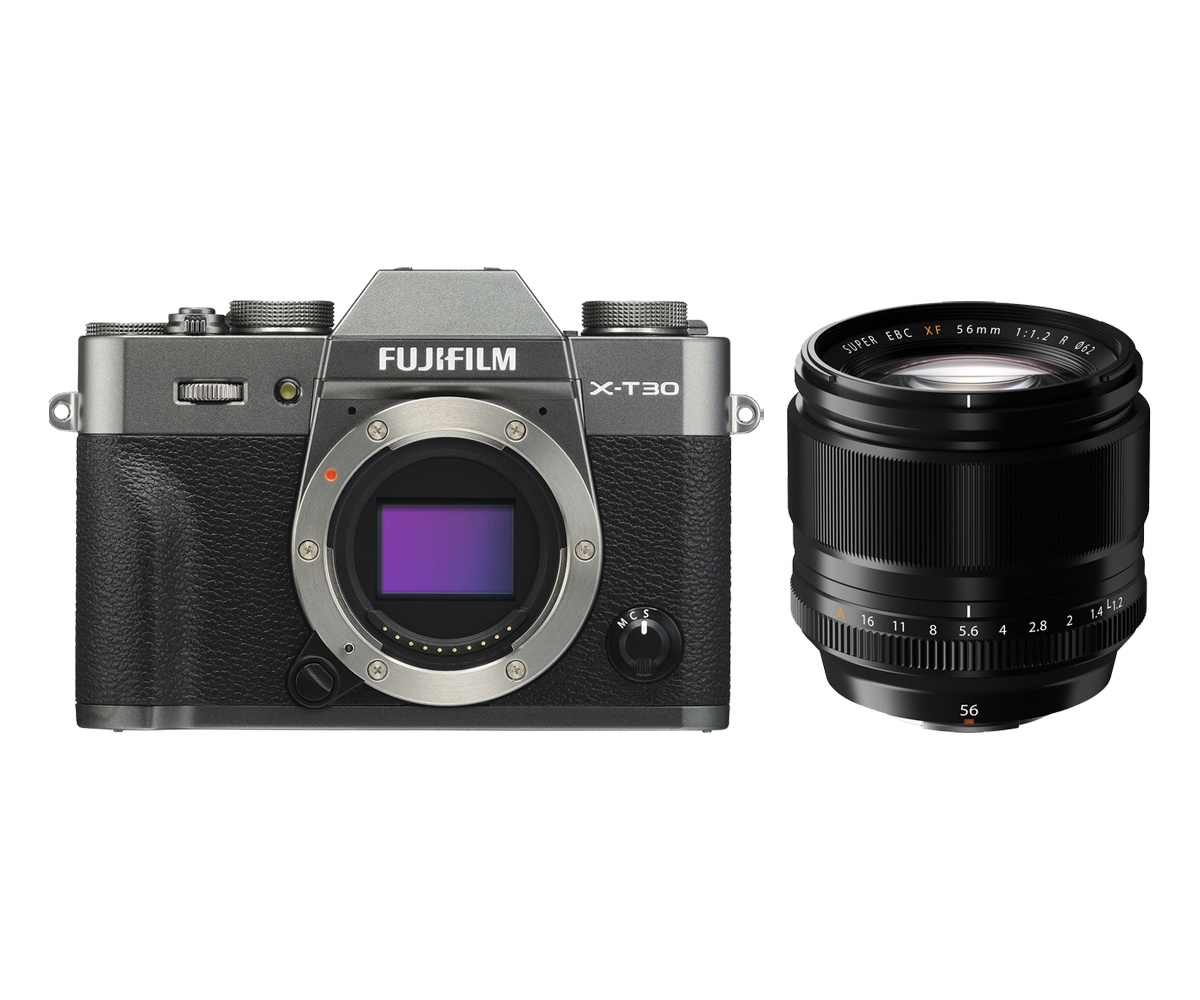








































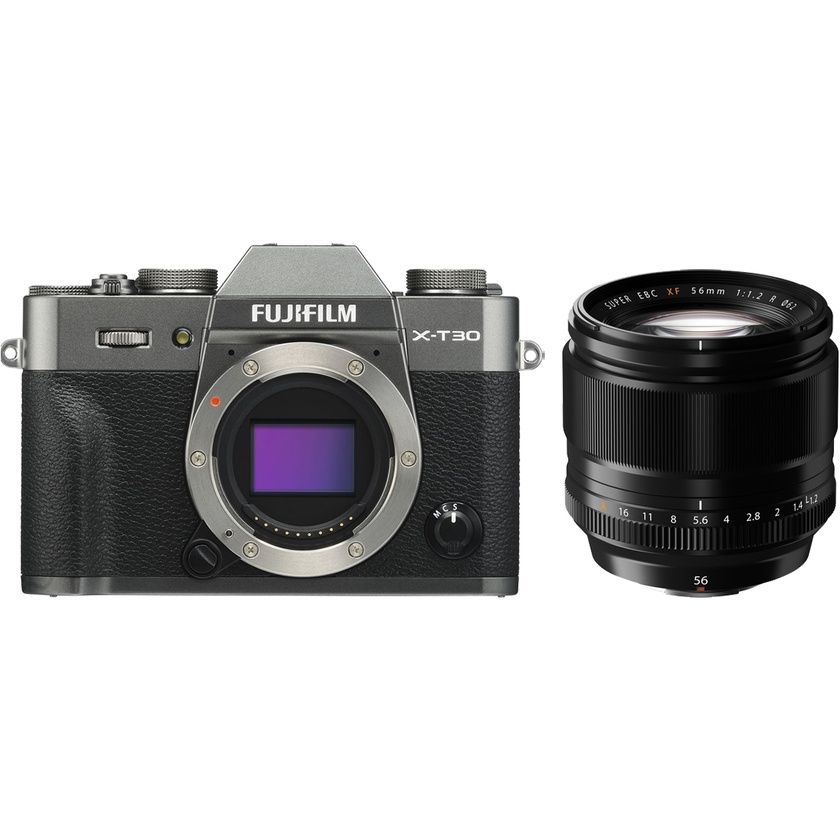
The Fujifilm X-T30 Mirrorless Digital Camera is equipped with a host of new functions offering outstanding performance, utilising the 4th Generation image sensor and processor with 26.1 megapixel resolution and fast high-performance AF. In addition, phase detection pixels are now across the entire frame (100%). Other advanced features include a joystick for shifting focus points easily, a new intuitive touch-screen panel with improved response, and an improved body design that offers better holding stability to ensure comfortable shooting even with larger lenses.
An improved algorithm delivers even more advanced AF-tracking performance. This includes enhanced accuracy in face/eye detection and the introduction of a Face Select function to provide priority auto-focus on a selected subject.
The evolution of AF performance is available with both still photos and during video filming. Improved exposure stability during face/eye AF and face recognition in the AF-C (continuous AF) mode adds to ease of use. Video performance itself has also been enhanced, offering high-resolution audio recording and smooth 4K/30P video recording.
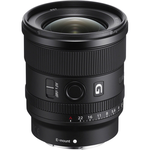
The Fujifilm XF 56mm f/1.2 R Lens is a prime portrait-length lens that provides a 35mm-equivalent focal length of 85mm when used with Fujifilm APS-C-sized mirrorless digital cameras. A bright f/1.2 maximum aperture greatly benefits selective focus control and also aids in shooting in low-light conditions. The internal focusing system, as well as the use of a stepping AF motor, ensures quiet, smooth, and precise focusing capabilities that are ideal for both still and video applications.
One double-sided aspherical element, two extra-low dispersion elements, and four front-facing convex elements are integrated into the optical design to reduce chromatic aberrations and to benefit overall image clarity and sharpness. An HT-EBC multi-layer coating helps to minimize ghosting and lens flare for higher contrast and an additional coating has been applied to the rear side of the front-most lens element to further reduce ghosting that is common to lens designs with deep concave elements.