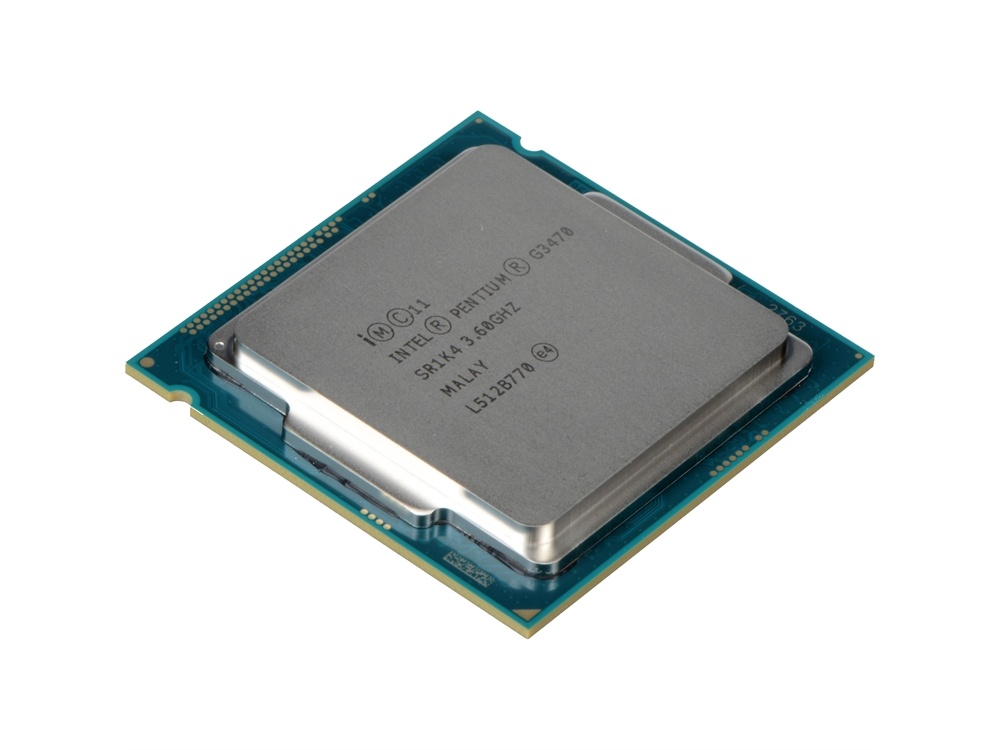















































































































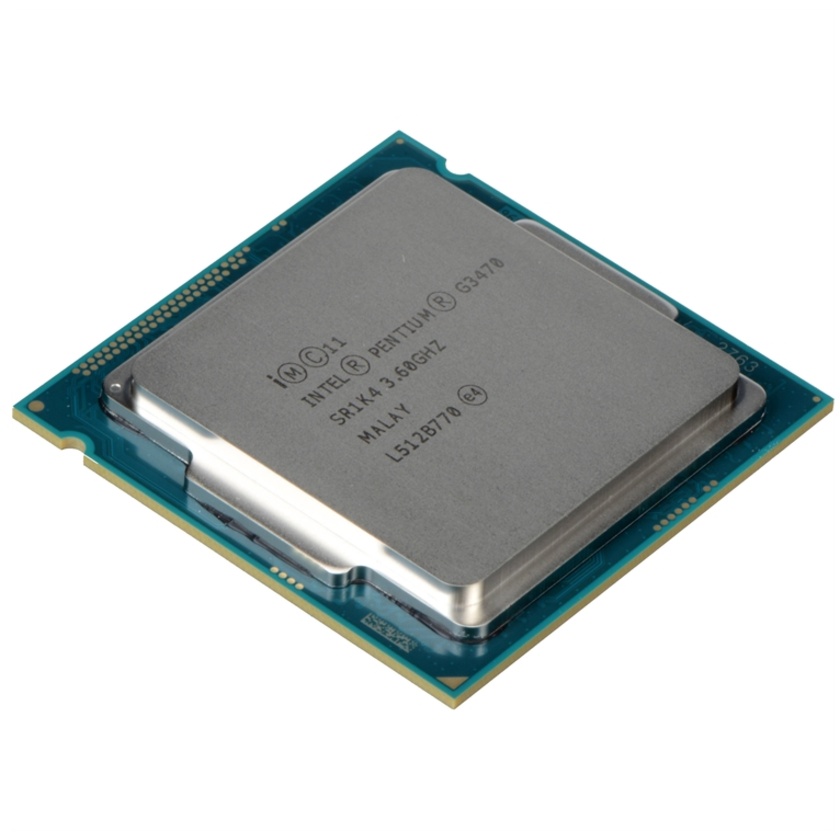
The Pentium G3470 3.6 GHz Dual-Core Processor from Intel is the fifth generation of the Pentium product line that is now built using Broadwell architecture. This processor features a base frequency of 3.6 GHz and as with many Broadwell technologies, comes with features such as Intel Virtualization Technology. This processor also features two cores with two threads in an FCLGA1150 socket and has 3MB of cache memory. Having two cores allows the processor to run multiple programmes simultaneously without slowing down the system, while the two threads allow applications to complete tasks sooner by working in parallel.
This Pentium G3470 3.6 GHz Dual-Core Processor is well suited for users who are interested in general-use tasks, such as Internet browsing, chequing E-mail, document creation and editing, multimedia playback, and more. This processor also supports up to 32GB of DDR3 1333/1600 MHz RAM, has integrated Intel HD Graphics, as well as SSE4.1/4.2 and AVX 2.0 Extensions.
Features
Intel Virtualization Technology (VT-x)#####
Intel Virtualization Technology allows one hardware platform to function as multiple "virtual" platforms. It offers improved manageability by limiting downtime and maintaining productivity by isolating computing activities into separate partitions
Intel VT-x with Extended Page Tables (EPT)#####
Intel VT-x with Extended Page Tables, also known as Second Level Address Translation (SLAT), provides acceleration for memory-intensive virtualized applications. Extended Page Tables in Intel Virtualization Technology platforms reduce the memory and power overhead costs, and increase battery life through hardware optimisation of page table management
Intel 64
Intel 64 architecture delivers 64-bit computing on server, workstation, desktop, and mobile platforms when combined with supporting software. Intel 64 architecture improves performance by allowing systems to address more than 4GB of both virtual and physical memory
Enhanced Intel SpeedStep Technology
Enhanced Intel SpeedStep Technology is an advanced means of enabling high performance while meeting the power-conservation needs of mobile systems. Conventional Intel SpeedStep Technology switches both voltage and frequency in tandem between high and low levels in response to processor load. Enhanced Intel SpeedStep Technology builds upon that architecture using design strategies such as Separation between Voltage and Frequency Changes, and Clock Partitioning and Recovery
Execute Disable Bit
Execute Disable Bit is a hardware-based security feature that can reduce exposure to viruses and malicious-code attacks, and prevent harmful software from executing and propagating on the server or network
Specifications
| Processor Number | G3470 |
| Cache | 3 MB |
| DMI2 | 5 GT/s |
| # of QPI Links | 0 |
| Instruction Set | 64-bit |
| Instruction Set Extensions | SSE4.1/4.2 and AVX 2.0 |
| Embedded Options Available | No |
| Lithography | 22 nm |
| Scalability | 1S Only |
| Thermal Solution Specification | PCG 2013C |
| Conflict Free | Yes |
| # of Cores | 2 |
| # of Threads | 2 |
| Processor Base Frequency | 3.6 GHz |
| TDP | 53 W |
| Max Memory Size | 32 GB (dependant on memory type) |
| Memory Types | DDR3 1333/1600 MHz |
| Max # of Memory Channels | 2 |
| Max Memory Bandwidth | 25.6 GB/s |
| Processor Graphics | Intel HD Graphics |
| Graphics Max Dynamic Frequency | 1.1 GHz |
| # of Displays Supported | 3 |
| PCI Express Revision | 3.0 |
| PCI Express Configurations | Up to 1x16, 2x8, and 1x8/2x4 |
| Max # of PCI Express Lanes | 16 |
| Max CPU Configuration | 1 |
| Package Size | 1.5 x 1.5" / 37.5 x 37.5 mm |
| Graphics and IMC Lithography | 22 nm |
| Sockets Supported | FCLGA1150 |
| Intel Turbo Boost Technology | No |
| Intel vPro Technology | No |
| Intel Hyper-Threading Technology | No |
| Intel Virtualization Technology (VT-x) | Yes |
| Intel Virtualization Technology for Directed I/O | No |
| Intel VT-x with Extended Page Tables (EPT) | Yes |
| Intel TSX-NI | No |
| Intel 64 | Yes |
| Enhanced Intel SpeedStep Technology | Yes |
| Trusted Execution Technology | No |
| Execute Disable Bit | Yes |