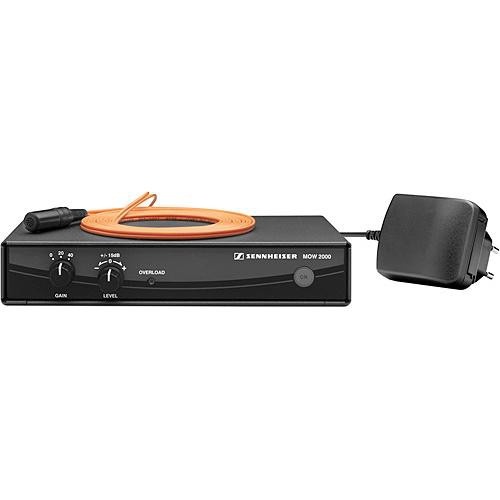


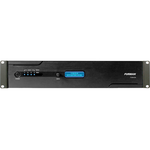











































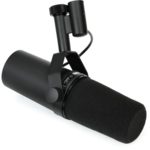














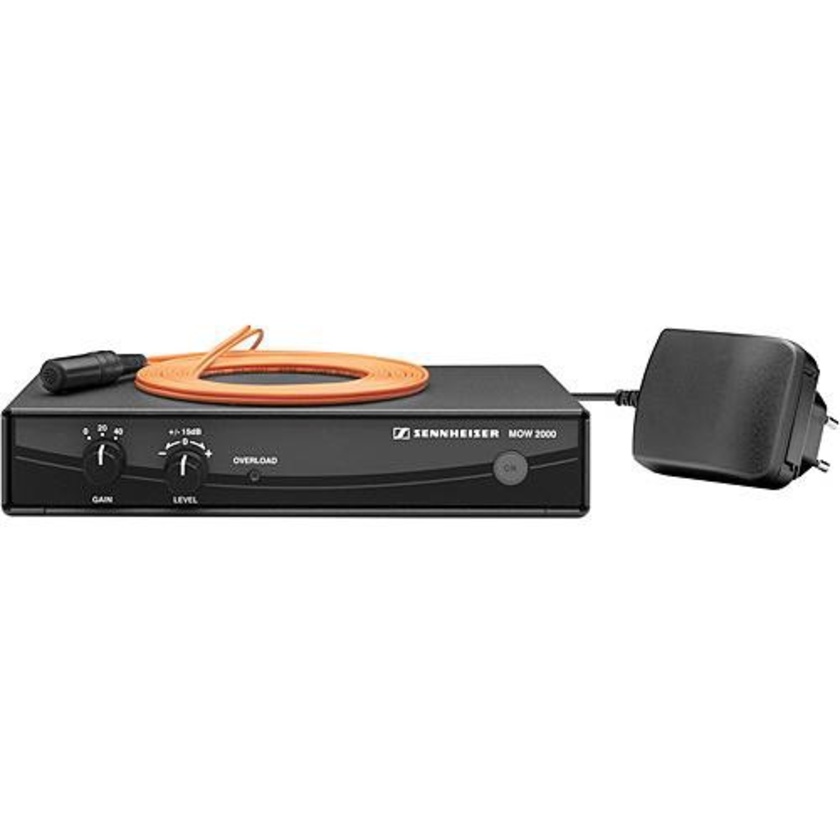
The Sennheiser MO2000 - Optical Microphone System is a specialty measurement microphone that can go where other microphones fear to tread. The microphone uses a light from an LED that is directed onto a reflective diaphragm. As the diaphragm is moved by sound signals, a displacement of the reflected light is read by a receiver waveguide, which in turn activates a photodiode that converts the light intensity variations into electric signals.
The advantage of this system is that microphone head and the electronics can be located far away from each other. Additionally, the component parts of the MO 2000 H acoustic-optical microphone head are made of a plastic material that is suitable for use in areas with aggressive substances, such as gases, and salts, or areas of high humidity and radiation. All components of the microphone head, including the optical waveguides, are free of metal with no electric current flow.
The main areas of application for the MO 2000 SET optical microphone are acoustic measuring and communication tasks in industrial environments, in EMC-sensitive areas and in the field of magnetic resonance imaging and magnetoencephalography (MEG). A further application possibility is in the field of undetectable acoustic monitoring.
Applications
These advantages make it possible to use the optical microphone in areas in which other microphones are not suitable:
- Example 1: the optical microphone can be used in potentially explosive atmospheres, such as for the acoustic monitoring of gas drying plants in natural gas production (IAS MO 2000 SET). In this case, the microphone can “hear” slow leaks, which, due to their small size, cause neither a pressure loss nor an alarm message in the other monitoring systems.
- Example 2: In medical applications, the microphone is ideal for use in magnetic resonance imaging (MRI), for example to maintain communication with the patient during MRI scans or to achieve active noise cancellation in MRI. The optical microphone does not disturb the imaging process and is itself not influenced by the strong fields inside magnetic resonance imaging equipment.
- Example 3: In measuring technology, the microphone is ideal for use in EMI/EMC laboratories, as it does not influence the electric field. In this case, for example, it functions like an “ear on a mobile phone”.
Delivery Includes
- 1 optical microphone with MO 2000 H optical cable (3 m)
- 1 MO 2000 CU central unit
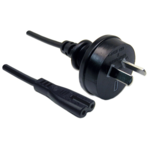
- 1 power supply with various adapters (EU, UK, US)
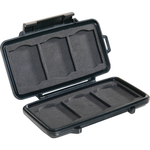
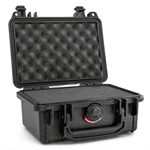
- 1 carrying case
- 1 operating instructions
Product Highlights
- For Use in Hostile Environments
- Acoustic-Optical Microphone Head
- Remote Processing Unit
- Plastic Head Construction
Specifications:
- Pick-up pattern: omni-directional
- Sensitivity as per 121 TR 9-5: 15 mV/Pa
- S/N: >50 dB(A) related to 1 Pa sound pressure
- Sound pressure level (SPL): 134 dB
- Gain: infinitely variable in the range +/-15 dB, switchable in steps 0 dB, + 20 dB, + 40 dB
- Operating temperature: MO 2000 H: -10 °C to +70 °C; MO 2000 CU: 0 °C to +40 °C
- Power supply: 100-240 V AC auf 12 V DC, 5,4 W plug-in power supply with country adapters
- Current consumption: 120 mA
- Output impedance: 330 O asymmetrical / 660 O symmetrical
- Output level: 15 mV/Pa (potentiometer in mid position, switch set to 0 dB)
- Frequency response: 20 Hz to 40 kHz (+/-6 dB)
- Fibre glass: Multimode 200/230 µm